Achalasia Treatment in Frisco/Plano, TX
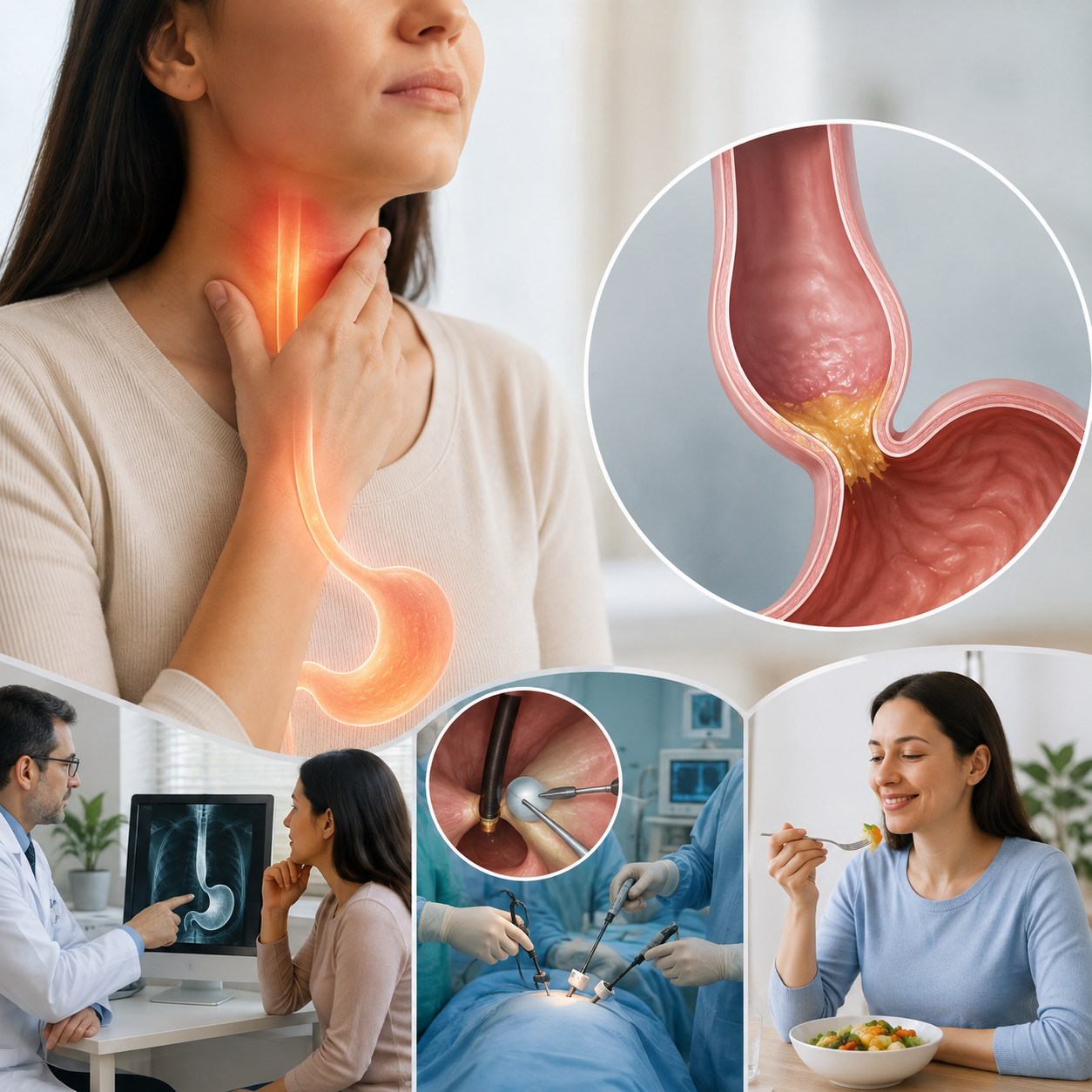
Achalasia treatment in Frisco/Plano, TX can help patients manage swallowing difficulty, food getting stuck, regurgitation, and other symptoms caused by this long-term esophageal condition. Achalasia prevents the esophagus from moving food normally into the stomach, and symptoms often become more noticeable over time.
Studies indicate that patients usually wait two years from the onset of symptoms before receiving a diagnosis. This lag happens because achalasia symptoms frequently resemble those of common ailments. You end up struggling by yourself as your quality of life deteriorates.
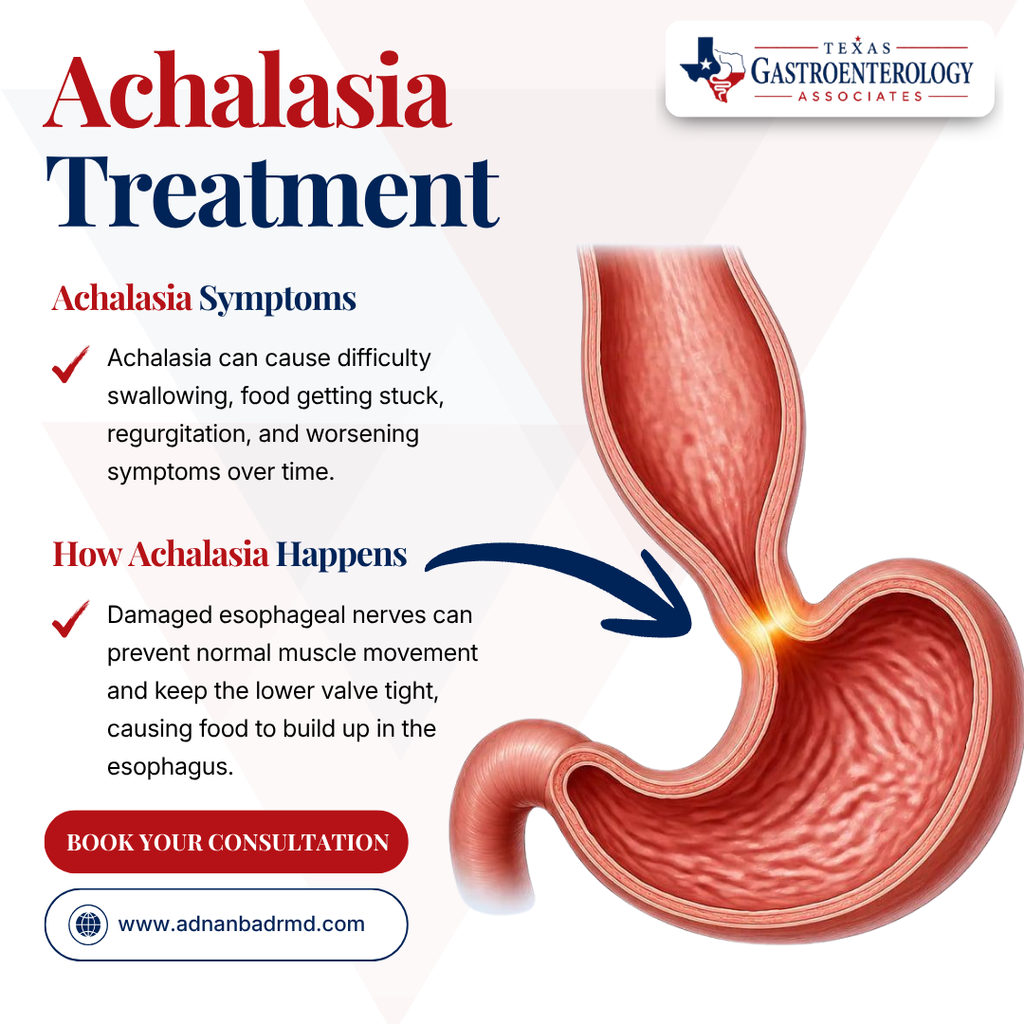
You should know what happens inside your body to spot this condition early. Your esophagus normally uses muscle contractions to push food down.
A valve at the bottom relaxes to let food into your stomach. With achalasia, nerve cells in your esophagus deteriorate. This makes those muscles fail, and the lower valve stays tight. Food gets trapped above this faulty valve and gets stuck in your esophagus.
Recognizing Achalasia Symptoms in Your Daily Life
Early Achalasia Symptoms can be easy to overlook because they may begin mildly, such as feeling that food is stuck in your chest after eating bread, meat, or rice.
A lot of people notice they need to drink water constantly to help swallow, or they find themselves eating at a snail’s pace & still manage to finish their meal. These early warning signs will normally just get worse over time as your esophagus essentially loses the ability to function properly.
As time passes, symptoms start to really stand out. In some cases, eating can become a real challenge. You might experience food coming back up into your mouth hours after you ate – particularly when you’re lying down at night.
It’s not uncommon to wake up in the middle of the night coughing or choking on food that’s been stuck in your esophagus.
Chest pain becomes a regular thing – & occasionally it’s so bad you’ll think you’re having a heart attack. Weight loss often follows because eating becomes this whole ordeal. Research shows that people with achalasia can end up losing 15-20 pounds before they even get a diagnosis, with some people losing even more.
You might also experience other signs that on the surface seem unrelated but are actually connected to achalasia.
For example, you might get heartburn that just won’t go away, even when you try the usual remedies. Or you might find yourself getting respiratory infections because – through no fault of your own – you’re accidentally inhaling tiny food particles while you’re asleep.
And let’s not forget unpleasant breath – food can start to ferment in your esophagus. Some people notice that their symptoms get worse when they’re stressed – or when they have a cold drink, which of course just makes the spasms in their esophagus even worse on top of everything else that’s going wrong.
Understanding Which Foods Create Problems
When you have achalasia, certain foods become your enemies because they are harder to swallow or more likely to cause blockages. Dry, dense foods are at the top of the danger list because they require strong esophageal contractions to move down, and your esophagus can’t generate that force anymore.
Bread, especially when not chewed thoroughly, forms sticky clumps that get stuck in your esophagus. Tough cuts of steak or chicken breast can sit in your chest for hours, causing intense discomfort and increasing your risk of complete obstruction.
Rice is particularly problematic because individual grains compact together to form a mass that won’t budge through your narrowed esophageal opening. Raw vegetables like carrots or celery require thorough chewing, which many patients can’t do.
Sticky foods like peanut butter, thick cheese, and certain candies cling to your esophageal walls rather than sliding through. Research on achalasia treatment in Frisco/Plano, TX, shows that patients who avoid these foods have fewer emergency episodes and better nutrition during the time between diagnosis and definitive treatment.
Foods that increase obstruction risk need special attention because they can trigger emergencies that require immediate medical care. Large bites of any food can completely block your esophagus; that’s why small bites and thorough chewing become survival strategies.
Carbonated beverages sometimes help in the short term by creating pressure that forces food through the tight valve, but they also stretch your esophagus over time and can worsen the underlying problem. Alcohol relaxes the esophageal muscles even further, making achalasia symptoms worse during and after drinking.
How Achalasia Treatment in Frisco/Plano, TX Changes Your Eating Habits
Getting proper Achalasia Treatment in Frisco/Plano, TX can improve swallowing, but patients should have realistic expectations about the recovery process. The most common treatment options are pneumatic dilation, where doctors stretch your lower esophageal valve using a balloon, or surgical myotomy, where they cut the valve muscle to allow food to pass.
Studies show that both approaches relieve achalasia symptoms in about 90% of patients, but surgery provides longer-lasting results.
After treatment, your esophagus doesn’t instantly go back to normal function because the underlying nerve damage is permanent.
What changes is that food can now pass through the relaxed valve into your stomach, even though your esophageal muscles still can’t push effectively. You’ll likely experience some reflux since the valve that was once too tight is now permanently relaxed.
Medical data from patients who received achalasia treatment in Frisco/Plano, TX, shows that about 60% develop mild to moderate reflux that requires long-term medication management. You will start to swallow better over several weeks as the inflammation subsides and you get used to your treated esophagus.
Most patients can eat normal foods, but they often keep certain habits like eating slowly, chewing thoroughly, and drinking liquids with meals. Long-term studies show that patients who had successful achalasia treatment have significant improvement in their quality of life and regain most or all of the weight they lost before treatment.
Your Post- Achalasia Treatment Diet Roadmap
The first week after achalasia treatment requires a strict diet while your esophagus heals. You should only have clear liquids like broth, juice, and water for the first 2-3 days.
This prevents food particles from irritating the treatment site and allows inflammation to settle. Stay hydrated by sipping fluids throughout the day, not drinking large amounts at one time.
Week 2, you can advance to full liquids and pureed foods that require no chewing. Thin cream soups, protein shakes, yogurt, and smooth puddings provide nutrition without stressing your healing esophagus.
Avoid anything with chunks or pieces that can get stuck. Many achalasia patients find that room temperature foods feel more comfortable than very hot or very cold foods during this phase.
Weeks 3 and 4, you can have soft, moist foods that break apart easily. Scrambled eggs, mashed potatoes, well-cooked fish, and ripe bananas work for most patients. Take small bites and chew everything completely before swallowing.
Notice how foods feel going down and avoid anything that causes discomfort. Your body will tell you when you’re ready for each progression.
After the first month, you can start introducing regular foods one at a time and watch for achalasia symptoms that may indicate your esophagus isn’t ready for certain foods. Start with softer versions of normal foods before advancing to tougher textures.
Most patients are back to a regular diet by 6-8 weeks post-treatment, and some continue to avoid their most problematic pre-treatment foods as a precaution. Research on achalasia treatment shows that patients who follow this gradual approach have fewer complications and a faster return to normal eating.
Frequently Asked Questions
Can Achalasia Symptoms Come Back After Treatment?
Yes, achalasia symptoms can come back because treatment only addresses the tight valve and not the damaged nerves. Studies show recurrence rates of 10-15% within 5 years after surgery and 20-30% after balloon dilation, but repeat procedures usually provide relief again.
Will I need to take medication after achalasia treatment in Frisco/Plano, TX?
Most patients need acid-reducing medication because the treated valve stays open and stomach acid flows back into your esophagus. Your doctor will determine if you need daily meds based on your acid reflux symptoms.
How long do achalasia symptoms take to develop?
The timeline varies greatly. Some patients notice symptoms that worsen in months while others over years. The average time from first symptoms to diagnosis is 2 years, but seeking evaluation early can shorten that.
Can children get achalasia symptoms?
While it is rare, achalasia does affect children and teens, about 5% of all cases. Pediatric achalasia symptoms are often misdiagnosed as eating disorders or reflux because doctors don’t suspect this rare condition in young patients.
Is achalasia hereditary?
Current research says achalasia isn’t directly inherited, but there may be genetic factors that increase susceptibility when combined with environmental triggers. Having a family member with achalasia doesn’t increase your risk.
What happens if achalasia symptoms go untreated?
Untreated achalasia gets worse and worse, leading to severe malnutrition, weight loss, repeated aspiration pneumonia from regurgitated food, and esophageal dilation. Long-term untreated patients are at risk of esophageal cancer.
Can Achalasia Treatment in Frisco/Plano, TX Be Done as an Outpatient Procedure?
Surgical myotomy usually requires a 1-2 day hospital stay, while balloon dilation can be a same-day discharge. Your situation and treatment approach will determine if outpatient is an option.
Get Achalasia Treatment in Frisco/Plano, TX, with Dr. Adnan Badr
Living with undiagnosed or untreated achalasia can make eating difficult and result in severe complications. If you’re frequently feeling like food is getting stuck in your chest or losing weight even though you’re eating enough, it’s time you got yourself checked out.
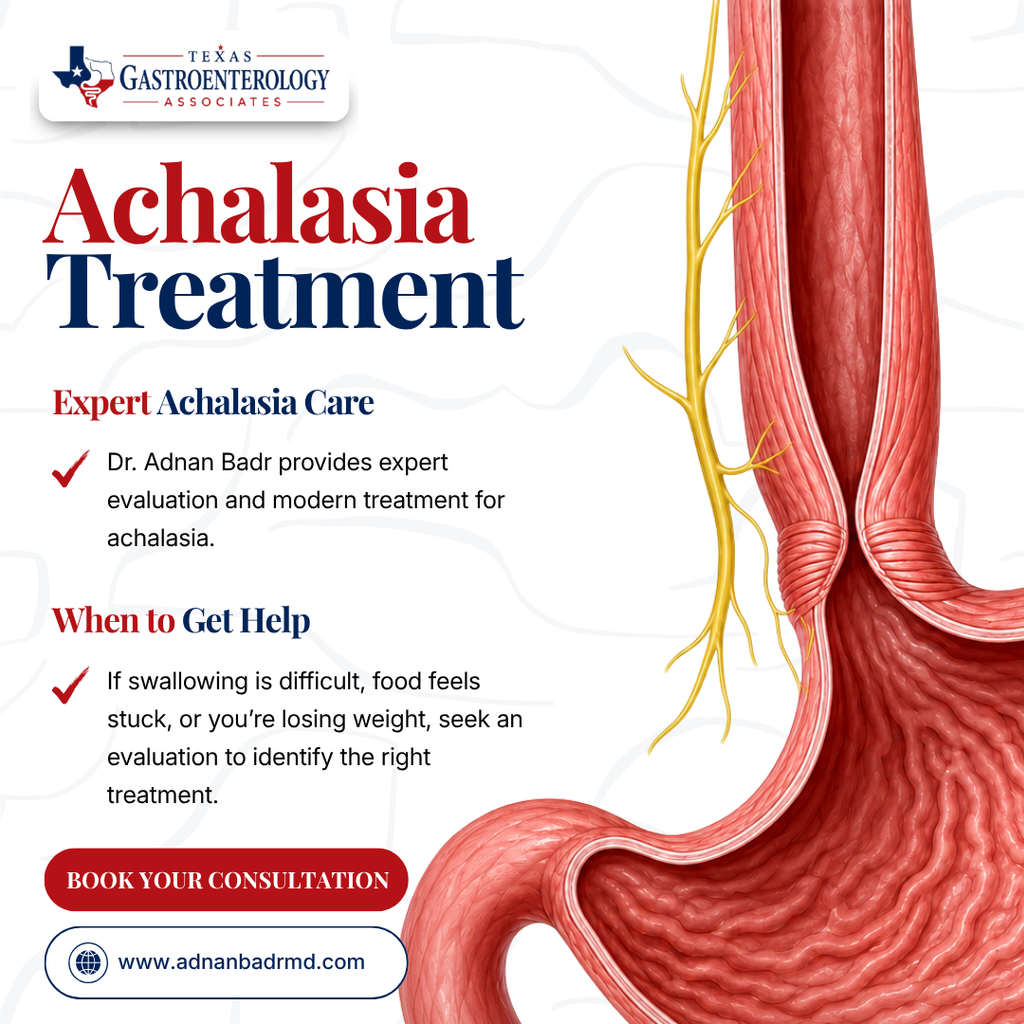
Dr. Adnan Badr MD, offers a thorough evaluation for achalasia in Frisco/Plano, TX, and is at the forefront of modern treatments to help you take control of your swallowing and live a normal life. Book an appointment with Dr Adnan Badr MD today to get expert diagnosis and treatment.