
GI SYMPTOMS · FRISCO / PLANO, TX
Constipation Treatment in Frisco/Plano, TX
Constipation Treatment in Frisco/Plano, TX, may be needed when a person has fewer than three bowel movements a week, hard stools, straining, bloating, or difficulty passing stool over a prolonged period of time.
Barrett’s Esophagus Expertise
Upper Endoscopy On-Site
Board-Certified GI
For patients with ongoing symptoms, Constipation Treatment in Frisco/Plano, TX can help identify the cause and guide the right next step for digestive relief.
SYMPTOMS
Constipation Symptoms That May Need Treatment in Frisco/Plano, TX
The symptoms of chronic constipation include:
- Passing out stools fewer than three times a week
- Having hard and lumpy stools
- Straining to pass out stool
- Having a feeling like there's a blockage in your rectum
- Having a feeling like you can't completely empty the stool from your rectum
- Seeing blood particles in your stool dye to bruising in your anus
Causes of constipation
Constipation commonly occurs when waste or stool moves too slowly through the digestive tract or can’t be passed out from the rectum. This can cause stool to become hard and dry inside the rectum.
Other causes of constipation include:
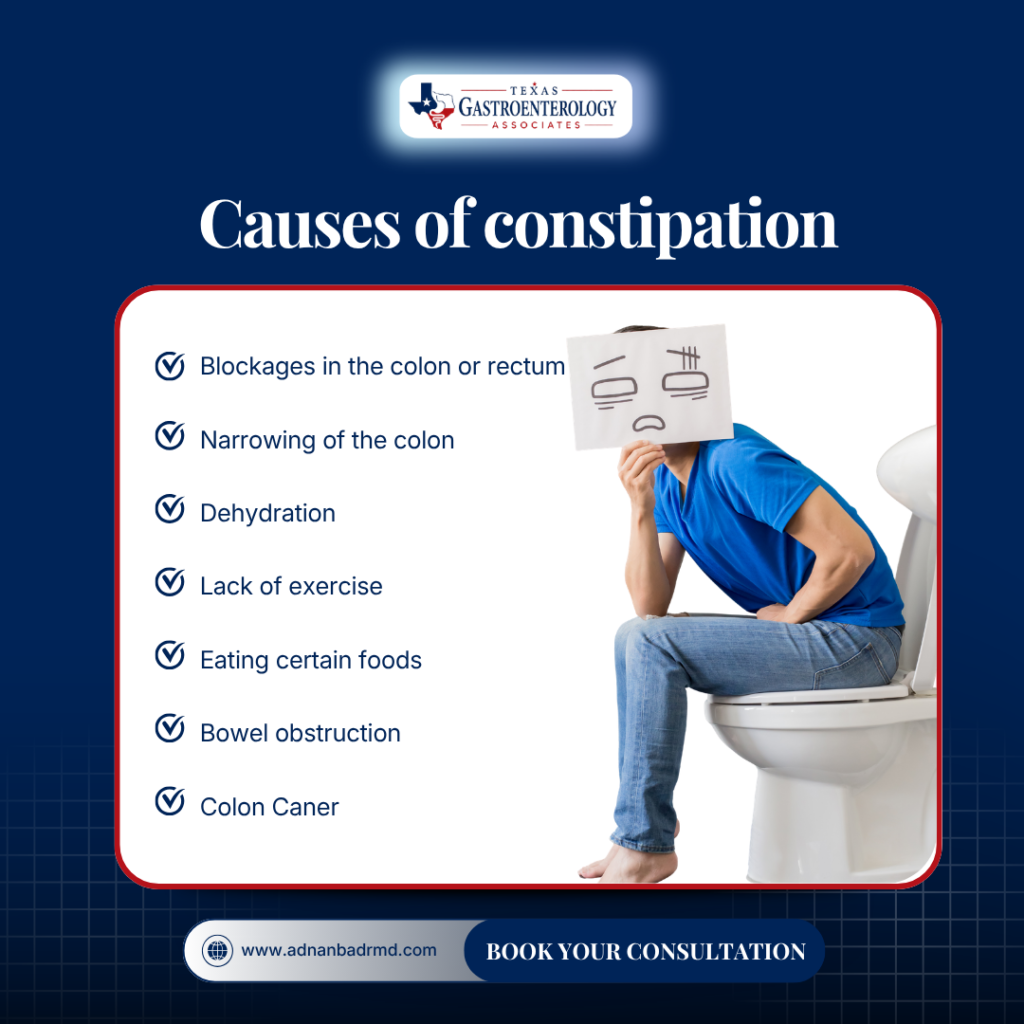
- Blockages in the colon or rectum
- Narrowing of the colon
- Dehydration
- Low or inadequate intake of fiber
- Taking certain medications
- Lack of exercise
- Eating certain foods
- Irritable bowel syndrome
- Bowel obstruction
- Colon Caner
- Problems with the nerves around the colon and rectum such as autonomic neuropathy
- Multiple sclerosis
- Parkinson's disease
- Spinal cord injury
- Stroke
- Inability to relax the pelvic muscles to allow passing out of stool
- Inability of the pelvic muscles to coordinate relaxation and contraction correctly
- Weakened pelvic muscles
- Diabetes
- Overactive parathyroid gland
- Underactive thyroid
- Pregnancy
TREATMENT
Constipation Treatment in Frisco/Plano, TX
There are different options for constipation treatment in Frisco/Plano, TX. These include:
Diet and lifestyle changes
Diet and lifestyle changes for constipation include:
Diet changes
Eating more fiber diets increase the weight of your stool and make the stool easily pass through your intestines and out through the rectum. Eat more fresh fruits and vegetables.
Stay hydrated
Always drink lots of water to soften your food for easy digestion and bowel movement.
Exercise
Engaging in exercises and physical activities increase muscle activity in your intestines.
Have bowel movements whenever you feel the urge
Don’t ignore the urge to have a bowel movement at any time. Take out time and always visit the toilet whenever you have the urge for bowel movement.
Laxatives
There are several types of laxatives that you can take to make it easier to have a bowel movement. These include:
Fiber supplements
Fiber supplements such as psyllium, calcium polycarbophil, and methylcellulose soften the stool and make it easier to pass out.
Stimulants
Stimulants such as bisacodyl, and sennosides cause your intestines to contract for easier bowel movement.
Osmotics
Osmotic laxatives such as oral magnesium hydroxide, magnesium citrate, lactulose, and polyethylene glycol help stool easily move through the colon by increasing secretion of fluid from the intestines and also stimulate bowel movements.
Lubricants
Lubricants such as mineral oil enable stool to easily move through your colon.
Stool softeners
Stool softeners such as docusate sodium and docusate calcium soften the stool by extracting water from the intestines.
Enemas and suppositories
Enemas are used to soften stool and produce a bowel movement. Suppositories aid easy passing out of stool by providing lubrication and stimulation.
ANSWERS TO COMMON QUESTIONS
Frequently Asked Questions
Yes. It's possible that you can be constipated and still poop. Constipation is typically a condition whereby you are having fewer than three bowel movements a week. It doesn’t mean the inability to have bowel movement permanently.
Drinking apple juice, pear juice, or prune juice can help with constipation and make you poop.
Factors that can suddenly get you constipated include stress, changes in routine, and conditions that slow muscle contractions of the colon. Not drinking enough water after eating, and eating diets low in fiber can also lead to sudden constipation.
You can eat more high-fiber foods, such as whole-grain bread and cereals. You can also eat beans, fresh raw vegetables, fresh raw fruits or cooked fruits with the peel on. You can eat dried fruits, dates, pear, prunes, popcorn, apples, and nuts.
If you haven’t pooped in 5 days, it can be as a result of constipation. You can:
- Drink more water throughout the day
- Drink warm water, especially early in the morning
- Drink hot coffee
- Eat more fruits and vegetables
- Eat prunes and pear
- Engage in regular exercises
- Eat high-fiber diets
- Take over-the-counter laxatives
Yes. Eating a lot of high-fat meats, dairy products and eggs can cause constipation.
You can relax your bowel by sitting on the toilet for 15 minutes each day. While sitting on the toilet, you can rest your feet on a low stool or lift your knees above your hips.

Take Control of Your Digestive Health Today
Understanding constipation danger signs empowers you to act before minor problems become medical emergencies. Your digestive health impacts every aspect of your wellbeing. Ignoring constipation danger signs makes treatment more difficult and dangerous.
If you are experiencing concerning symptoms or struggling with chronic constipation, Adnan Badr MD provides Constipation Treatment in Frisco/Plano, TX to help evaluate your symptoms and guide the right digestive care plan.
Frisco
4500 Hillcrest Rd, Ste 185, Frisco, TX 75035
Plano
5800 Communications Parkway, Plano, TX 75093
Phone
(972) 514-3530 · Fax (972) 514-3531
Hours
Mon–Thu 8:00 AM–4:30 PM · Fri 8:00 AM–4:00 PM