
DIGESTIVE CONDITION · FRISCO / PLANO, TX
Bile Duct Cancer Symptoms in Frisco/Plano, TX
Bile Duct Cancer Symptoms in Frisco TX can include jaundice, dark urine, pale stools, itching, abdominal pain, unexplained weight loss, fatigue, fever, and digestive changes. Bile duct cancer can be difficult to detect early, so recognizing these warning signs and getting a timely GI evaluation is important.
Bile duct cancer is one of the toughest cancers to detect early in Frisco, TX. Only about 8,000 Americans receive this diagnosis each year, but your chance of survival depends completely on recognizing symptoms before the disease advances.
Barrett’s Esophagus Expertise
Upper Endoscopy On-Site
Board-Certified GI
The bile ducts are thin tubes that carry digestive fluid from your liver to your small intestine. They rarely show warning signs until cancer has taken hold. You must understand the symptoms to watch out for. This knowledge could save your life.
What Your Bile Ducts Do
Your bile ducts act as essential highways in your digestive system. They transport bile from your liver and gallbladder to your small intestine. Bile breaks down fats from the food you eat and help your body absorb important vitamins. These ducts measure less than a quarter inch wide. This means even a small tumor can block them completely.
When cancer grows in these narrow passages, your entire digestive system feels the impact. The blockage stops bile from flowing properly. It causes bile to back up into your liver and leak into your bloodstream. This creates many symptoms that often seem unrelated at first. This makes early detection very difficult.
The Warning Bile Duct Cancer Symptoms You Must Recognize
Jaundice is the most common symptom of bile duct cancer in Frisco, TX. It appears in about 90 percent of patients. You will notice your skin and the whites of your eyes turning yellow. This clearly signals that bile cannot drain properly from your system. This yellowing develops gradually over weeks. This explains why many people ignore it initially.
Your urine will turn dark, like tea or cola. Your stools become pale or clay colored. These changes in bodily waste reflect the disrupted bile flow that affects how your body processes nutrients.
The itching that comes with jaundice can drive you crazy. Your skin feels like insects are constantly crawling on it. Scratching brings no relief. This happens because bile salts build up under your skin when they cannot leave through your digestive tract. Many patients call this one of the most frustrating symptoms. It affects your sleep and your daily functioning.
Abdominal pain usually centers in your upper right side or the middle, below your ribs. The pain feels dull and persistent rather than sharp and sudden. You might also feel pain in your back or right shoulder blade as the tumor presses against nearby nerves. This discomfort often worsens after you eat, especially after eating fatty foods that need more bile for digestion.
Unexplained weight loss happens to about 30 to 50 percent of bile duct cancer symptoms patients. You lose pounds without trying. You often lose your appetite completely or feel full after eating only a small amount. Your body struggles to absorb nutrients properly because not enough bile reaches your intestines. This weight loss happens with profound fatigue. This fatigue makes even simple tasks feel exhausting.
Fever and night sweats sometimes signal an infection in the bile ducts. This condition is called cholangitis. It requires immediate medical attention. The blocked ducts create a place where bacteria multiply quickly. This can lead to a life-threatening situation. You might also develop nausea and vomiting as your digestive system fails to process food effectively.
The Challenge of Finding It Early
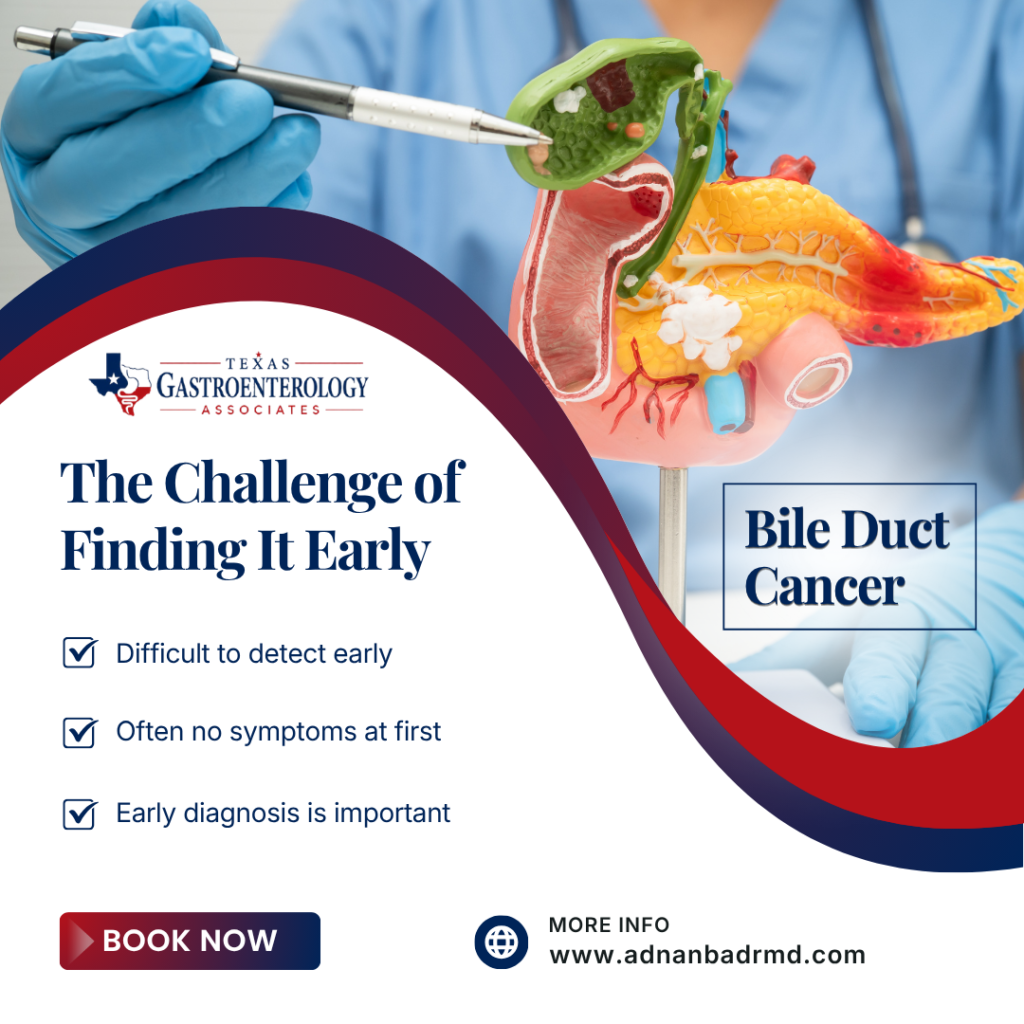
Bile duct cancer proves extremely difficult to catch in its earliest stages. The ducts lie deep within your body. Routine examinations cannot detect them. No standard screening tests exist for this cancer. We have mammograms for breast cancer and colonoscopies for colon cancer, but nothing for bile duct cancer symptoms.
Most patients show no symptoms until the tumor grows large enough to block bile flow or spreads to nearby organs. Research shows that only about 10% to 20% of bile duct cancers are found at a stage where surgery might cure them. This stark reality shows why you must pay attention to subtle changes in your body and see a doctor right away when something feels wrong.
Why Early Detection Changes Everything
When doctors find bile duct cancer symptoms before it spreads, your five-year survival rate reaches 30% to 50% for certain types. Once the cancer spreads to distant organs, that rate drops to less than 2%. This huge difference shows why catching symptoms early matters so much.
Surgery offers the only potential cure. Surgeons can only operate when the tumor remains inside the bile ducts. It cannot have invaded major blood vessels or spread throughout the liver. Every month of delay allows the cancer to advance.
This narrows your Bile Duct Cancer treatment options and reduces your chances of long-term survival.
Relief for Blocked Bile Duct Cancer Symptoms
Even when the cancer can’t be cured, modern medicine can ease symptoms from a blocked bile duct. One common approach is placing a stent — a small mesh tube that holds the duct open so bile can flow again. That often brings down jaundice, reduces itching, and makes eating and digestion easier.
Another option is a drainage tube inserted through the skin into the bile duct, letting bile drain into an external bag. It’s less convenient than an internal stent, but it works when a stent isn’t possible. These measures don’t treat the Bile Duct Cancer itself, but by restoring bile flow, they can greatly improve quality of life.
Understanding Your Bile Duct Cancer Symptoms Risk Factors
Certain conditions greatly increase your chances of developing bile duct cancer in Frisco/Plano, TX. Primary sclerosing cholangitis, a disease that causes scarring and swelling of the bile ducts, raises your risk to about 10% to 15% over your lifetime.
People with this condition need regular monitoring because cancer can develop silently. Chronic liver disease, including hepatitis B and C infections, cirrhosis, and fatty liver disease, also raises your risk a lot.
Bile duct cysts, present from birth, increase cancer risk by up to 15%. Inflammatory bowel diseases like ulcerative colitis are connected to higher bile duct cancer symptoms rates, especially when combined with primary sclerosing cholangitis.
Exposure to certain chemicals used in the rubber and aircraft industries has been linked to increased risk. Liver fluke parasites, common in Southeast Asia but rare in America, can cause chronic bile duct swelling that leads to cancer decades later.
Age matters. Most people are diagnosed after 65, but those with inherited genetic conditions or long-term bile duct problems can develop cancer much earlier. Recent studies also point to obesity and diabetes as possible risk factors, and researchers are still investigating these links.
ANSWERS TO COMMON QUESTIONS
Frequently Asked Questions

Take Action Now: Schedule a Consultation with Dr Adnan Badr MD in Frisco/Plano, TX
If you have noticed any of these symptoms, especially yellowing skin, dark urine, pale stools, or persistent abdominal pain, you need expert evaluation immediately. Time matters critically with bile duct cancer.
At Adnan Badr MD, we specialize in comprehensive bile duct cancer treatment in Frisco/Plano, TX. We use advanced diagnostic techniques and the latest treatment protocols.
We understand the urgency of bile duct cancer symptoms in Frisco/Plano, TX. We provide prompt, thorough assessments to determine the best path forward for your specific situation.
Do not wait for symptoms to worsen. Contact Adnan Badr MD in Frisco/Plano, TX, today to schedule your consultation and get the answers you need.
Frisco
4500 Hillcrest Rd, Ste 185, Frisco, TX 75035
Plano
5800 Communications Parkway, Plano, TX 75093
Phone
(972) 514-3530 · Fax (972) 514-3531
Hours
Mon–Thu 8:00 AM–4:30 PM · Fri 8:00 AM–4:00 PM